
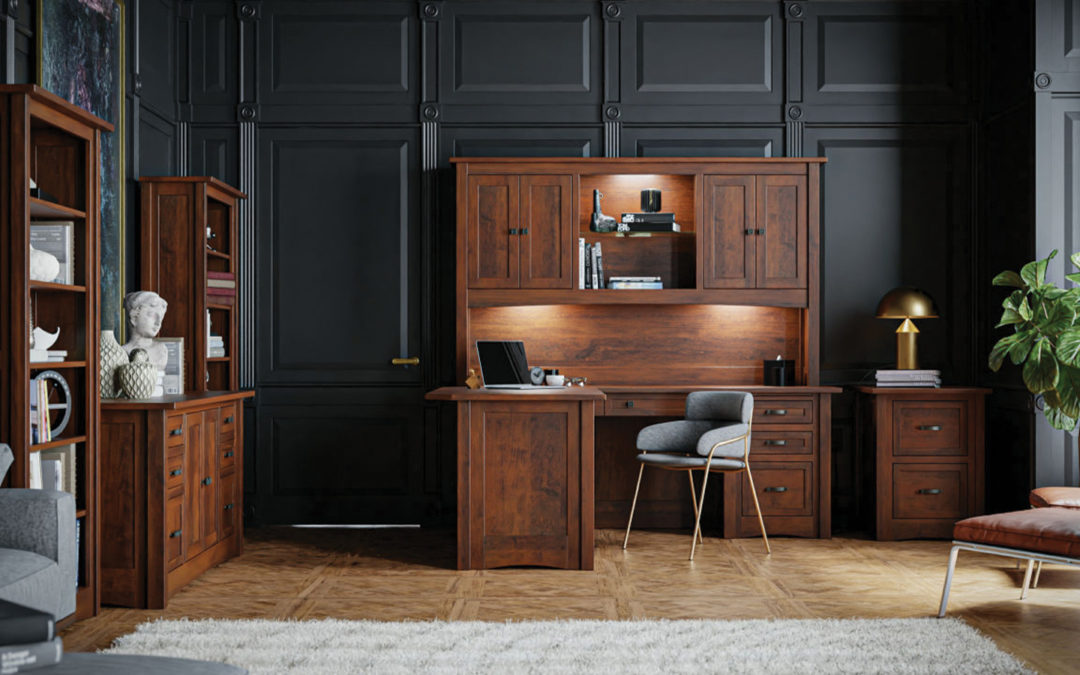

Since 2020, work-from-home has shifted from a short-term trend to a permanent feature of modern life. Five years later, many people are discovering that their quick-fix home office setups—from Ikea to makeshift spaces—are no longer meeting their needs. Now is the time to invest in quality furniture that sets work-from-home up for success. This guide focuses on how Amish office furniture—known for its craftsmanship, durability, and customizability—can transform your home office.
Choosing the Right Desk
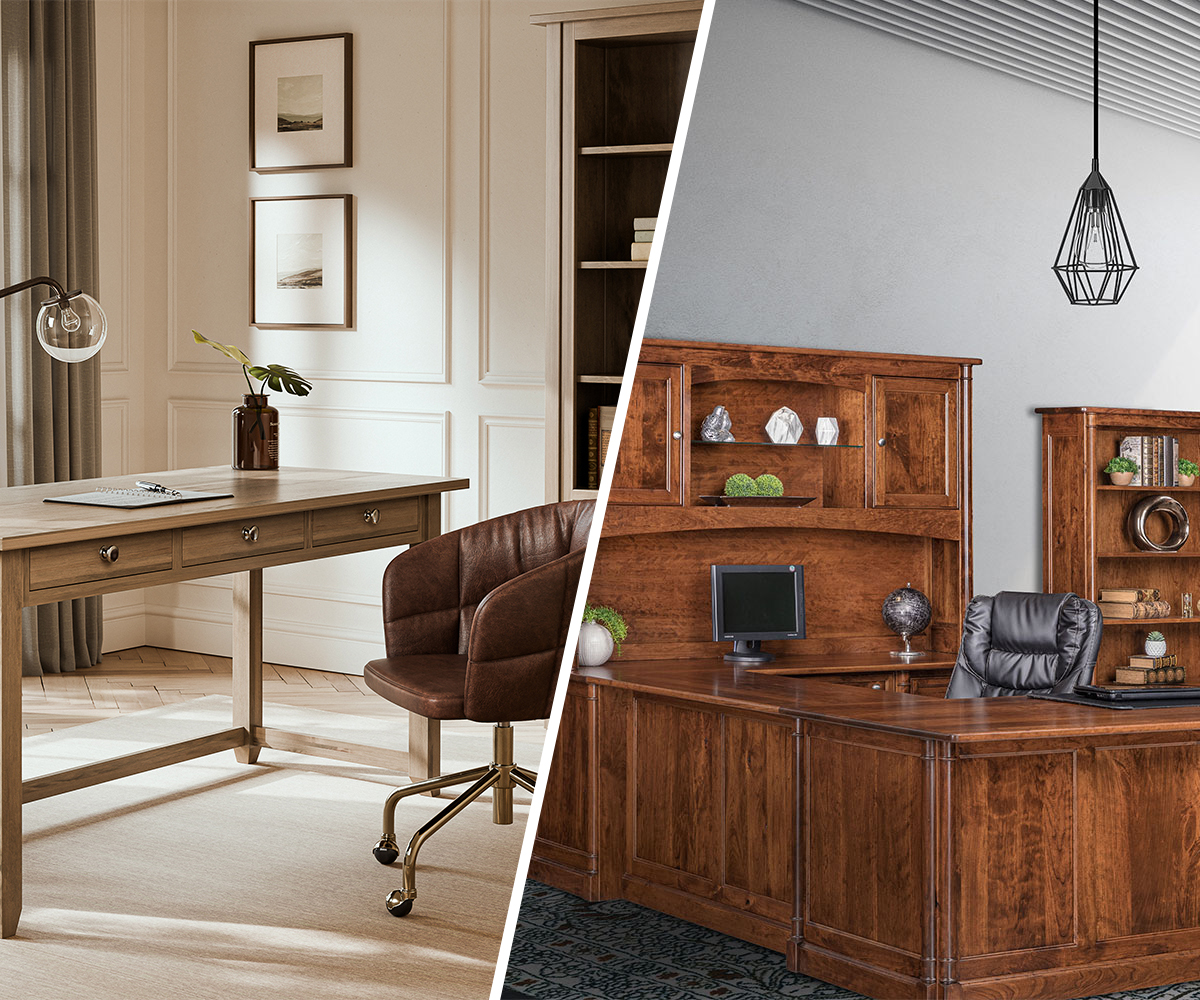
Every home office starts with a desk—but not all desks are created equal. Before selecting a piece, take time to reflect on how your workspace functions and what you need from it.
Functionality First
- Minimalist or Maximalist? Decide whether you need a sleek surface with minimal storage or a hub of drawers, cabinets, and compartments.
- Surface Space: If you need multiple monitors or space to spread out documents, consider an L-shaped desk. If you’re limited on space, vertical solutions like hutches or overhead shelving are ideal.
- Multi-Use Spaces: If your desk shares a room with a guest bed or is tucked into a hallway, choose a design that complements your home’s style while remaining functional.
Styles of Amish Desks
Where Amish office furniture designers really shine is their customizability. For each of the following basic designs, keep in mind that most can be modified to suit your space and needs perfectly. They make a wide variety of desks, arranged below from largest to smallest.
Executive Desks
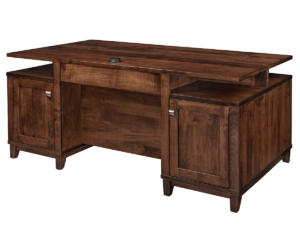
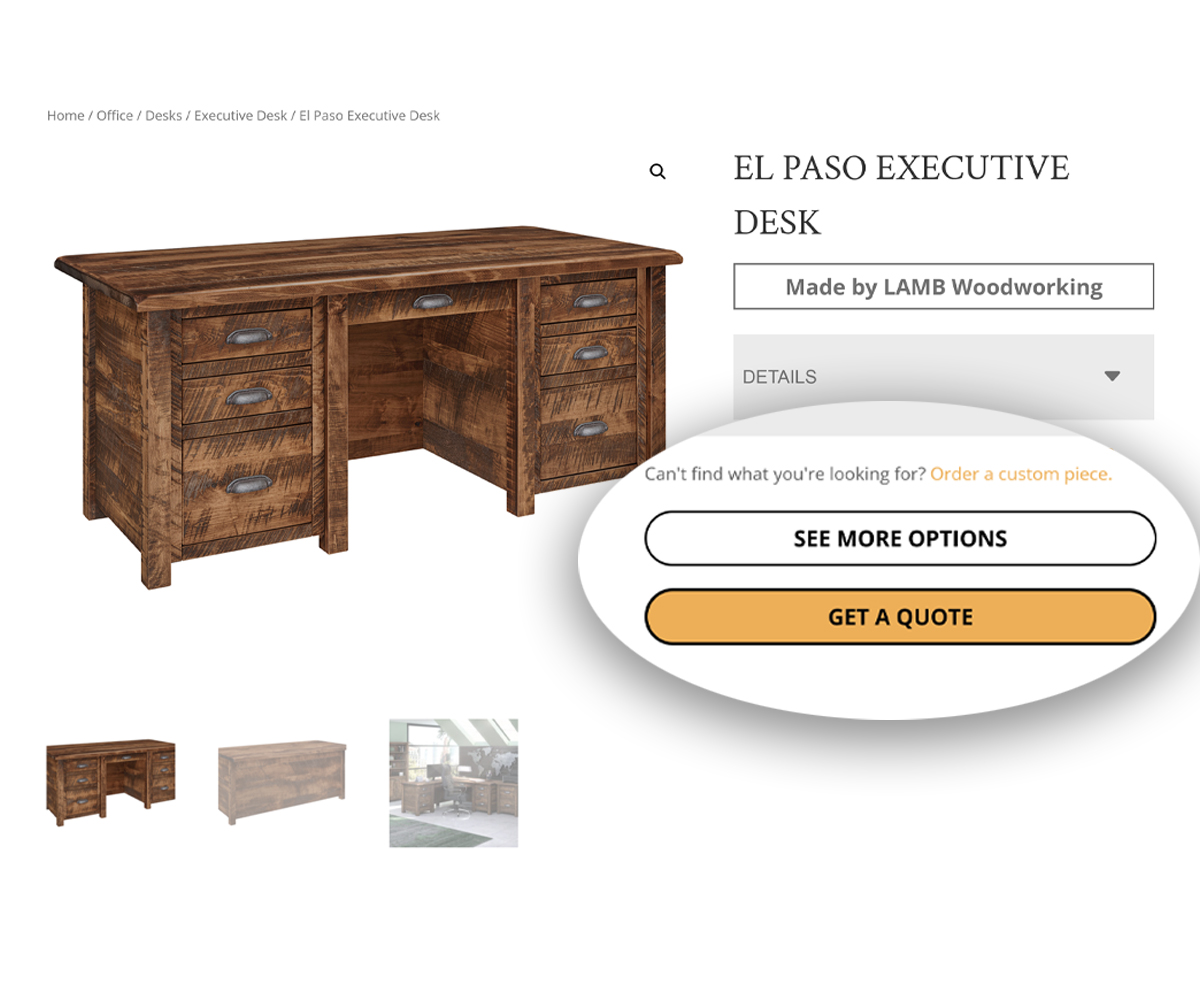
Executive desks are large, perfect for dedicated office spaces. These desks feature drawer banks on both sides of the kneehole. More than any other, this desk can be customized. Some include built-in filing drawers, while others include hutches or bookshelves. Many can be L-shaped, giving you as much space as you desire.
Rolltop Desks
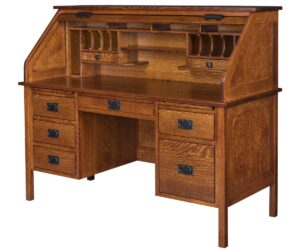
These traditional desks include a rolling cover, ideal for shared spaces where you want to quickly tidy up or hide clutter. Best for laptop users due to limited space for modern tech setups.

Computer and Student Desks
These compare to executive desks but are smaller, often with storage on one side and keyboard pull-outs. Again, these are available with hutches, in compact armoire forms, or with custom dimensions.
Minimalist Desks
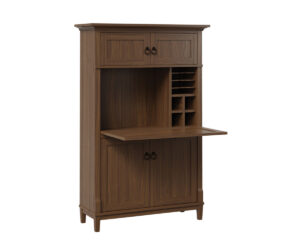
Options like laptop, writer’s, flipdown, and secretary desks are ideal for small or multi-use spaces. Flipdown and secretary desks include hidden compartments and fold-down writing surfaces.
Customization
If you don’t see what you need, most Amish woodshops offer custom design services to tailor any desk to your specifications.
Ergonomics
Since the 1990s, the effects of poor posture and lumbar support have been commonly discussed among health officials. If you work from home for significant amounts of time throughout the week, it’s important to invest in an ergonomic chair with good lumbar support. This is an investment almost certain to save you money in the long run.
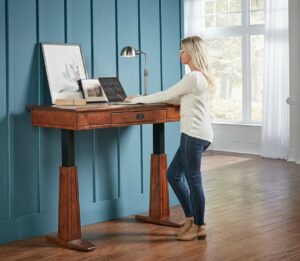
Studies now show that sitting for more than 30 minutes at a time can harm your health. Some government agencies even compare its long-term effects to tobacco use in the 1970s. As a result, many are moving beyond traditional setups—swapping chairs for balance balls or static desks for adjustable ones. Some modern desks include built-in timers that shift height every half hour. For the ambitious, treadmill desks offer a dynamic alternative. If your job requires long hours at a desk, it’s worth exploring ways to reduce time spent in a traditional chair, no matter how ergonomic it may be. Here are the three takeaways.
- Invest in an ergonomic chair with lumbar support—it’s a long-term investment in your health.
- Sit less: Adjustable desks and even treadmill desks help combat the health risks of extended sitting. Some Amish office furniture makers offer motorized or manual adjustable desks.
- Correct posture: Your knees should be at a right angle, feet flat on the floor, and eyes level with your monitor. Consider a monitor stand for ideal screen positioning.
Complementary Amish office furniture
Your home office needs more than just a desk to function well. Even though the desk is the most obvious and important part of a home office, don’t forget all the other possibilities.
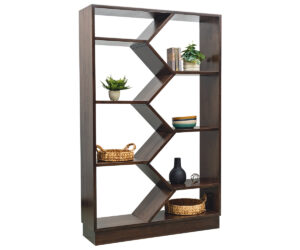
- Bookshelves: Bookshelves are versatile, and you can store products, binders, personal items, or even a Zoom background on a nice bookshelf.
- Filing Cabinets & Credenzas: Available in one- to four-drawer sizes. Some credenzas double as decorative furniture in dining rooms or living spaces.
- Multi-functional Pieces: Hutches, armoires, and filing cabinets can be used creatively. Small filing cabinets fit underneath tables or beside a bed as a nightstand.
- Additional Seating: Add a sofa, reading chair, or even a daybed for breaks or visitors.
Storage and Style for Small Spaces

If you’re working with limited square footage, smart furniture choices matter.
- Vertical Storage: Use wall-mounted shelves or tall hutches.
- Under-Desk Storage: Small cabinets or drawers that tuck under your desk help keep clutter at bay.
- Closet Offices: Desks can be installed in standard closets—add wallpaper, lighting, and shelves to make it stylish and functional.
With the rise of alternative office sites, it’s important to remember that furniture can also evolve and change with our lives.
Designing Your Personalized Functional Home Office
Even if your office shares space with another room, there are ways to make it feel distinct.

Zoning Shared Spaces
- Use area rugs to visually separate the workspace.
- Tuck desks into underused spaces like stair landings or closets.
- Barn doors are stylish, space-saving ways to create privacy (though they don’t block noise).

Lighting & Visual Comfort
- Place desks near windows to reduce eye strain.
- Use mirrors or landscape artwork to simulate depth if a window isn’t available.
- Layer lighting: combine overhead lights with lamps and sconces to reduce glare.

Mood & Personal Touches
- Color Psychology: Blues and greens soothe; reds and oranges energize; dark colors cocoon; light tones open up space.
- Decor & Texture: Add wallpaper, peel-and-stick molding, or DIY art to reflect your style.
- Plants: Not only do they purify the air and improve mood, but large plants like fiddle leaf figs also help define your workspace.
Conclusion: Amish Office Furniture for a Better Work Day

Creating a home office that supports your productivity, comfort, and style is no longer a luxury—it’s a necessity. Amish office furniture offers the rare combination of timeless craftsmanship, long-term durability, and personalized design, making it a smart investment for today’s remote professionals. By choosing well-crafted pieces and planning your space, however small, you can build a workspace that feels distinctly yours, while encouraging productivity.